Mood, trauma & PTSD

Ibogaine for PTSD, Depression, and Anxiety in Cancún

For when years of therapy and medication haven’t been enough, and you’re tired in a way that’s hard to explain.

Trauma, depression, and anxiety are not signs of weakness, and they don’t always respond to the first treatment you try. Beond offers medically supervised ibogaine treatment for people with PTSD, depression, and anxiety, including people who haven’t improved with other care. Many guests tell us they left with more than symptom relief: a clearer view of what they’ve been carrying, and a renewed sense of hope.

Clinical research is underway in the United States, but ibogaine is not approved by the FDA for any indication, and it affects the heart’s rhythm. So every guest is screened, monitored continuously, and supported before and after treatment.

A guest’s experience. Individual experience; results vary. Shared with the guest’s authorization.

Is this you?

  • You’ve done the work: therapy, medication, maybe more than one program.
  • Some things helped. Not enough.
  • You’re ready to try something different, with people who’ll care for you and be honest about what to expect.

Why are researchers interested?

Ibogaine has been studied for its effects on the brain’s reward and stress circuitry.

In animal studies at UCSF, it raised a growth factor called GDNF (R1). In people, researchers believe the experience may change how the brain processes fear, memory, and habit, which may help some people work through trauma. The science is still developing.

What early research shows

A study led by Dr. Nolan Williams and colleagues at Stanford Medicine followed 30 Special Operations veterans with mostly mild brain injury. They reported improved PTSD, depression, and anxiety symptoms one month after treatment, and a 12-month follow-up preprint reported that most improvements held (R11, R17).

See Does Ibogaine Work? for the full picture.

More than symptom relief

Trauma, depression, and anxiety don’t only live in symptoms. They can cut you off from yourself, from the people you love, and from any sense of why things matter. Feeling better is part of healing; feeling connected again is the other part.

That’s where many guests tell us ibogaine surprised them most. During the reflective hours after treatment, people often describe seeing their lives more clearly: what happened to them, what they’ve been carrying, and what still matters. Many talk about meeting old memories with more compassion and less fear, and reconnecting with themselves, with the people they love, and with something larger than themselves, whether they call it purpose, faith, or simply hope.

We can’t promise that experience, and it doesn’t happen the same way for everyone. But it’s why we don’t treat ibogaine as a medical procedure alone. Our coaches help you understand what came up, turn it into a plan for home, and keep that sense of meaning alive in the months after you leave.

Your stay, and how treatment works

Your days here are built around rest and care. You’ll have your own room to come back to, fresh meals from our chefs, and a daily massage.

Between sessions, you can join group workshops on preparation and integration, and choose from yoga, breathwork, meditation, sound healing, bodywork, acupuncture, and gentle movement, or simply sit by the pool in the quiet. You’ll be among other guests going through the same thing, and many people say that community is one of the most meaningful parts of their stay.

  1. A Beond physician reviews a guest's history with her at a desk in a bright consultation room.
    01Before you travel

    A physician reviews your history and interviews you by video.

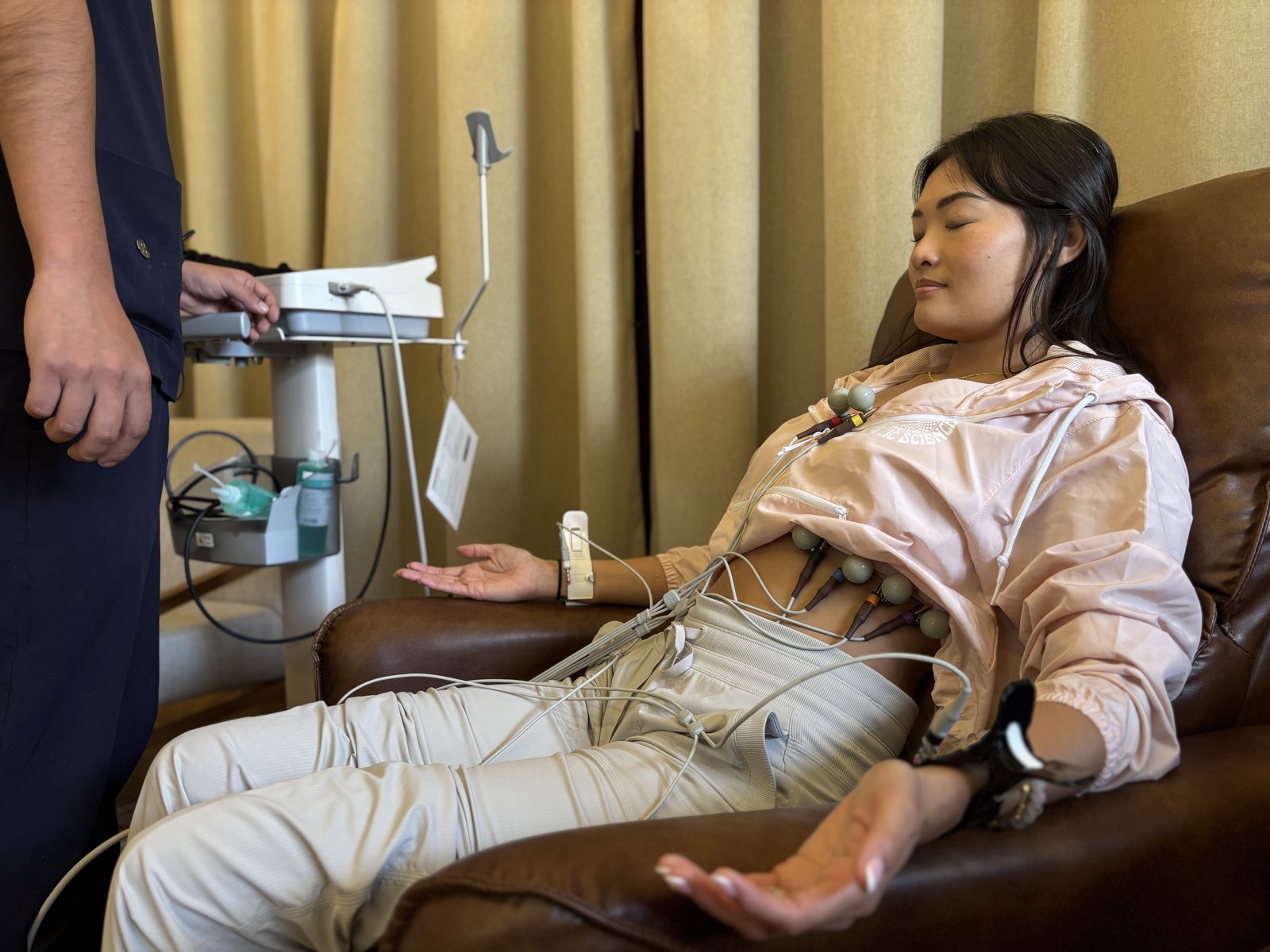
  2. A guest rests in a reclining chair with ECG leads in place while a team member runs the test.
    02On arrival

    An ECG and labs, with physicians and nurses on site.

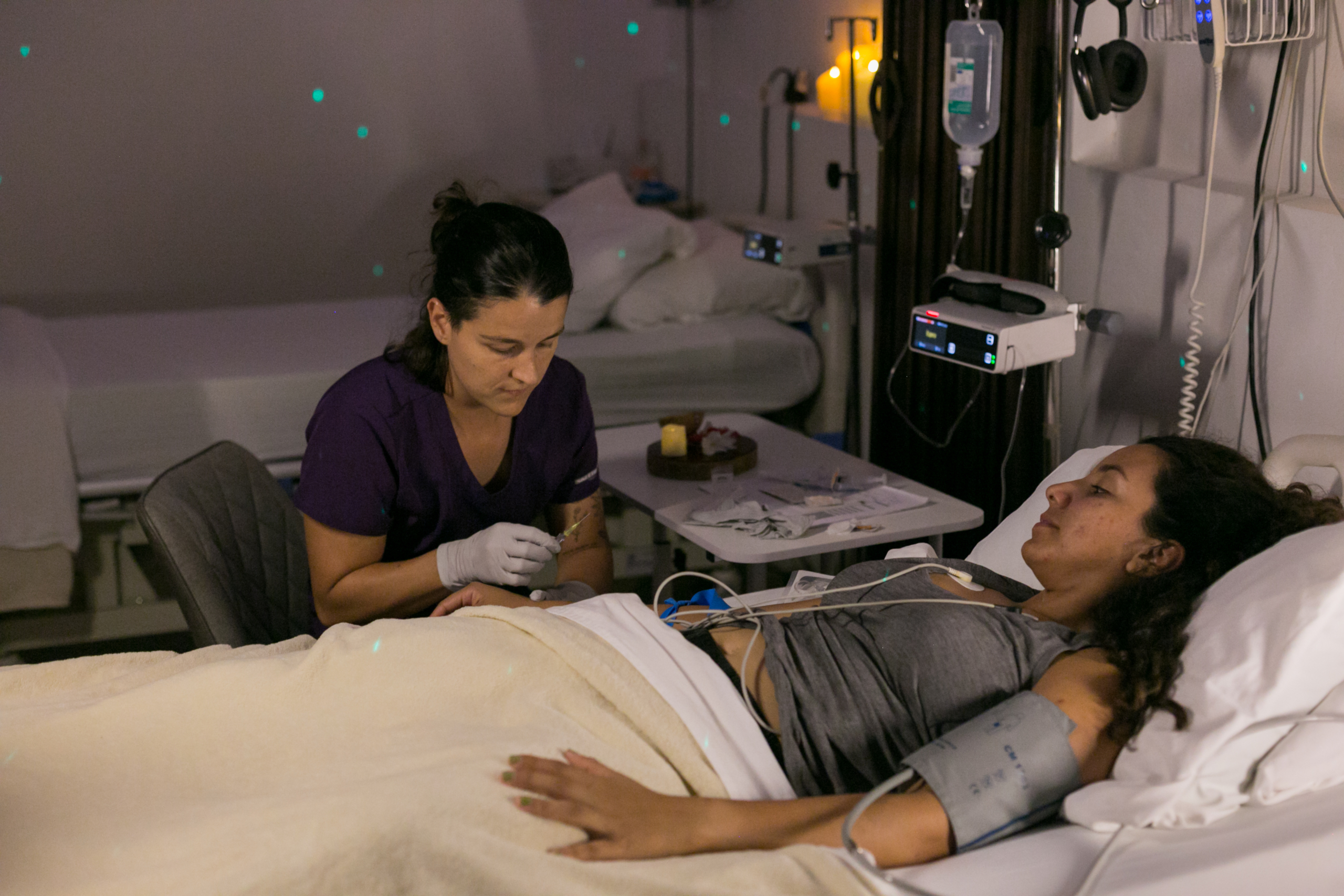
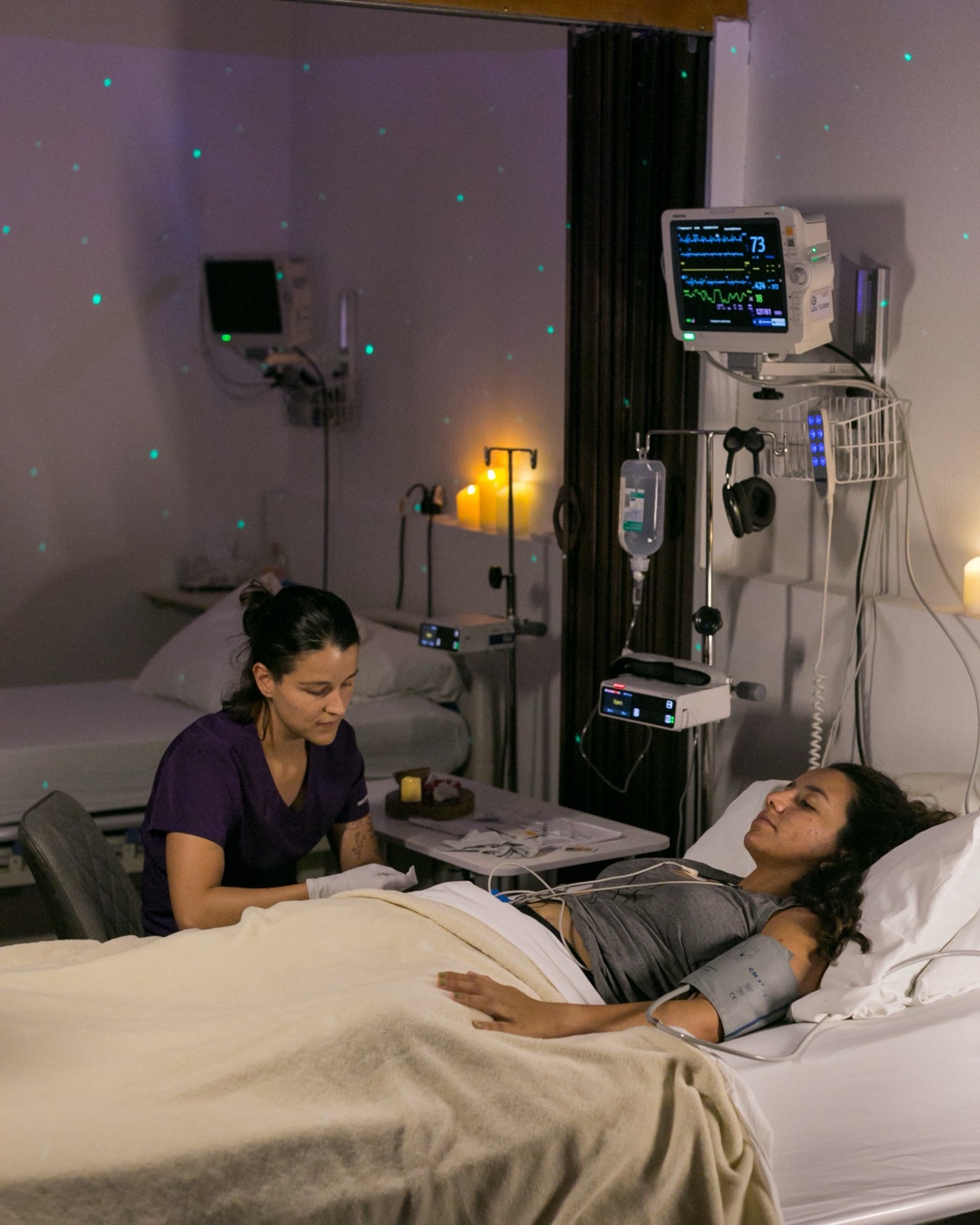
  3. A nurse checks on a guest resting in bed, with the heart monitor beside them.
    03Your ibogaine sessions

    Usually more than one, planned by your physician, with a nurse at your side and your heart continuously monitored.

  4. A guest writes in a notebook in a hanging chair surrounded by plants.
    04Afterward

    Rest, bodywork, and integration with your coach, and a plan for home, in your own words, before you leave.

Your sessions

Most guests have more than one session with the medicine, when it’s medically advised and decided together with you.

Over thousands of treatments, our medical team has found that several doses spread across a 10-day stay, rather than a single large dose, often work better for our guests: each session builds on the last, and in between there’s time to rest, reground, and work with your coach on what came up, so you can return with new questions and new things you’re ready to explore. Your physician plans the doses and timing. On treatment day, a nurse stays at your side the entire time, physicians are monitoring you, and your heart is on a continuous monitor.

What it feels like

The ibogaine experience is different for everyone.

Many people describe a dreamlike state with their eyes closed, where memories, images, and feelings surface, sometimes moments from childhood or people they love, viewed with unusual clarity and less judgment. It can be gentle, it can be hard, and often it’s both. It usually lasts several hours, followed by a quieter, reflective period of a day or more, when many people say they finally understood something about themselves. You’re never alone in it: your nurse is right beside you, and your coach helps you make sense of it afterward.

Safety

Ibogaine carries medical risk, mainly to the heart, and that risk can be reduced with careful screening, continuous cardiac monitoring, repeat ECGs, lab work, and magnesium and other electrolytes given through an IV.

We have about four staff for every guest, and over more than 6,000 treatments we’ve learned a great deal and keep improving our protocols. No protocol can remove risk entirely.

  • ~4:1staff for every guest
  • 6,000+treatments

See exactly how we screen, monitor, and respond on our Safety page.

Preparation and integration support

Support begins before you arrive and continues after you go home.

  • Before you arrive

    When time allows, you're matched with a coach for two virtual one-on-one preparation sessions.

  • While you're here

    Daily group workshops, and on days you're not receiving ibogaine, one-on-one coaching every day.

  • After you go home

    Two more one-on-one virtual sessions, scheduled when you're ready, with the option to book more; free weekly virtual group coaching; and access to Beond Circle, our alumni community platform.

For many people, ibogaine is the beginning of a new phase of care. Decide in advance what you’ll return to (your home environment, community support, ongoing psychotherapy, peer support) and have it arranged. Our therapists and coaches are certified in their disciplines.

Depression and anxiety: what to expect

Some people report symptom relief after ibogaine, and results vary.

Some need more than one treatment over time, particularly if they don’t return to medication. Ongoing care doesn’t have to involve ibogaine; other evidence-based options can be discussed with your prescriber. If you’ve tried several antidepressants without lasting relief, ibogaine, if it’s appropriate for you, would be one step in ongoing care, not the end of it.

About your medications

This is the hardest part for many people. For many, coming off medication entirely is unrealistic.

Ibogaine requires stopping most psychiatric medications beforehand, and tapers should be low and slow. Our physicians advise on any changes needed and ask you to work through them with your own prescriber, and we’d rather move your date than rush a taper. Never stop a medication on your own.

Our psychiatrist explains this in plain terms on Is Ibogaine Right for You?

Conditions where we think twice

Obsessive-compulsive disorder, complex PTSD, eating disorders, personality disorders, and using ibogaine to get off psychiatric medications. This is a conversation, not a closed door.

Who may not be a candidate, and the risks

Certain heart conditions, some medications, and some mental health conditions may rule someone out; see who can and cannot take ibogaine. Risks include heart rhythm changes, slow heart rate, nausea and unsteadiness.

We’d rather you hear that from us before you book a flight than after.

Frequently asked questions

Is ibogaine legal?

Ibogaine is not approved by the FDA for any indication and is a Schedule I controlled substance in the United States. It is not a scheduled substance under Mexican federal law, which is why clinics such as Beond can legally provide it in Mexico.

Who can't take it?

Exclusions include certain types of bipolar disorder, schizophrenia-spectrum disorders, acute suicidality, and certain heart conditions. Our physicians decide after a full medical and psychiatric evaluation; see who can and cannot take ibogaine.

How long does treatment take?

The average stay is 10 days, with most guests receiving more than one dose during their stay.

What does it cost?

Programs start at $13,500 (USD). See pricing for what's included.

Does insurance cover it?

No. Ibogaine treatment is not covered by insurance.

Could Beond help you or someone you love?

Ready to talk? Our team will answer your questions.